



My go-to dinner recipe in 2002: Bring a small pot of water to a boil. Add several frozen Korean dumplings and a package of instant Shin Ramyun noodles with only half the flavor packet (that stuff is spicy). Next, lightly beat an egg. When the noodles are soft, keep boiling and slowly drip the egg in while stirring, egg-drop soup style. Finish with sesame oil. Total cost: About $1.
2002 was the year I finished music school and moved to Los Angeles to pursue my dreams. Shin Ramyun was dinner a couple nights a week for the first five years. I worked odd jobs, including temping in the office of an oil refinery. I scraped by until finally stumbling into the career I’ve had for almost 20 years, recording and mixing film and TV scores.
Scraping by was possible for me because the rent for my one-bedroom apartment in East Hollywood was just $725 a month.1 The linoleum might have been peeling off the kitchen floor, but that apartment gave me something crucial: slack. The opportunity to fail repeatedly before figuring things out. I couldn’t have succeeded without it.
That slack, for the most part, is gone. In the 25 years since I moved to Los Angeles, average rents have tripled. LA used to be pretty cheap, but nowadays creative people are getting priced out before they get a proper chance to make it.
LA is a creative city to its core. The city’s international symbol is the Hollywood sign. And beyond the silver screen, LA is a hub for many creative industries: fashion, music, art, food, the performing arts, and tech. How do we keep that amazing energy here? How do we make sure broke creatives have enough slack to live in this town? The key ingredient is that $725 rent check.
The strikes laid bare the problem
While slack has been slowly disappearing from LA over the past couple of decades, Hollywood is facing a much more urgent crisis right now: 40% of jobs gone in four years. So many productions have left town. Just last month, American Idol announced it was moving to Atlanta, following The Masked Singer and Shark Tank out of LA this year.
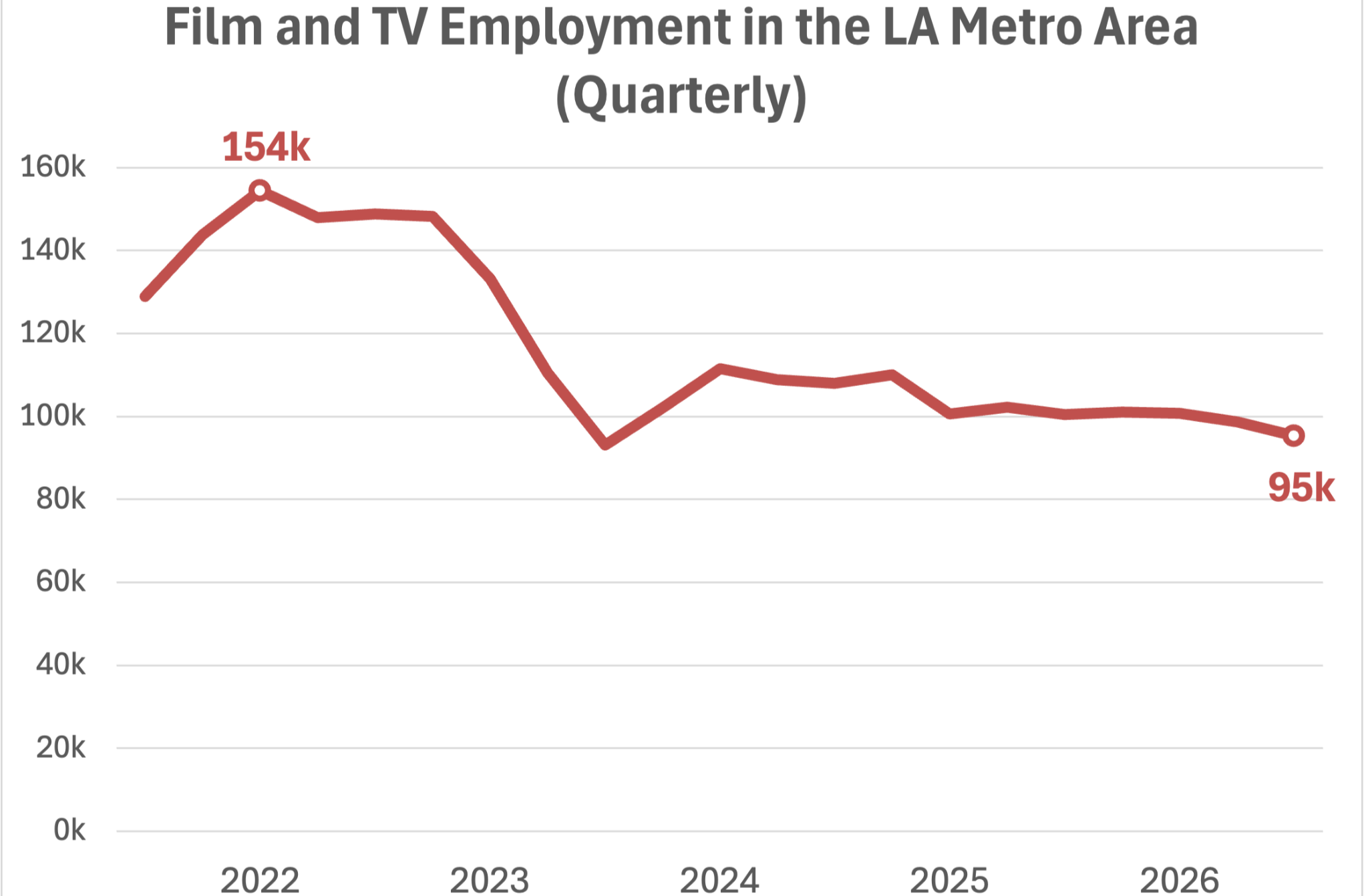
Much has been written about what can be done to lure productions back - tax credits, permitting reform, and more. We need all of it. The Governor just signed a tax credit into law aimed at keeping postproduction jobs like mine in California. Thank you, Gavin! But even if all these efforts succeed, there won’t be anyone left to hire if the actresses waiting tables and musicians temping at oil refineries get priced out.
This point came into focus when the writers and actors went on strike in 2023, often citing the cost of housing as a reason they walked the picket line. While most of the media chatter focused on the impact of streaming services, the people who do the work were telling us exactly what the problem was.
The striking workers got higher wages so they could afford to keep living here. But in a global economy, those high wages are a double-edged sword. The workers might be able to stay in LA, but the productions now have a bigger incentive to leave for places with lower labor costs like Atlanta. We need a better way to give creatives slack beyond just giving them raises.
How to give creatives more slack
The biggest expense for a broke waitress in Los Angeles is her rent. Almost one-third of LA renters hand more than half their incomes to their landlords on the first of the month. That includes all the struggling artists. And the best way to lower the rent for low-income Angelenos is to build more apartments.
That might sound counterintuitive. Why would building fancy new apartment buildings lower the rent for people living in walk-ups with peeling linoleum? Because it turns out many of the people living in those crappy apartments actually make decent money. They’d like to move to a nicer place with, say, air conditioning. But in a city that doesn’t build many new apartments, there’s no way for those wealthier people to level up. They end up competing with lower-income people for the same old apartments. That dynamic gives landlords all the power. They can raise the rent until only wealthier people can afford it and the broke waitresses get priced out.
Building new apartments flips the script. The fancy buildings vacuum up the renters that can afford them. The landlords of the older buildings are stuck with an inferior product with no air conditioning. They have no choice but to lower the rent, which gives their lower-income tenants more slack.
That’s what happened in Austin. Starting in 2015, the city built housing like crazy, adding 120,000 homes in 10 years – a total increase of 30%. Rents fell across the city. But according to the Pew Charitable Trusts, rents in the crappiest apartments went down much faster, including 11% in just one year – more than four times faster than in the fanciest buildings.
It’s not just an Austin thing. In every American city that has built a lot of new housing, rents in older, less fancy apartments have fallen faster than those in “luxury” buildings. In those cities, Pew broke out the rents in different classes of apartment buildings – dark blue bars are the fancy new buildings, and teal bars are the old ones in which broke waitresses likely live.
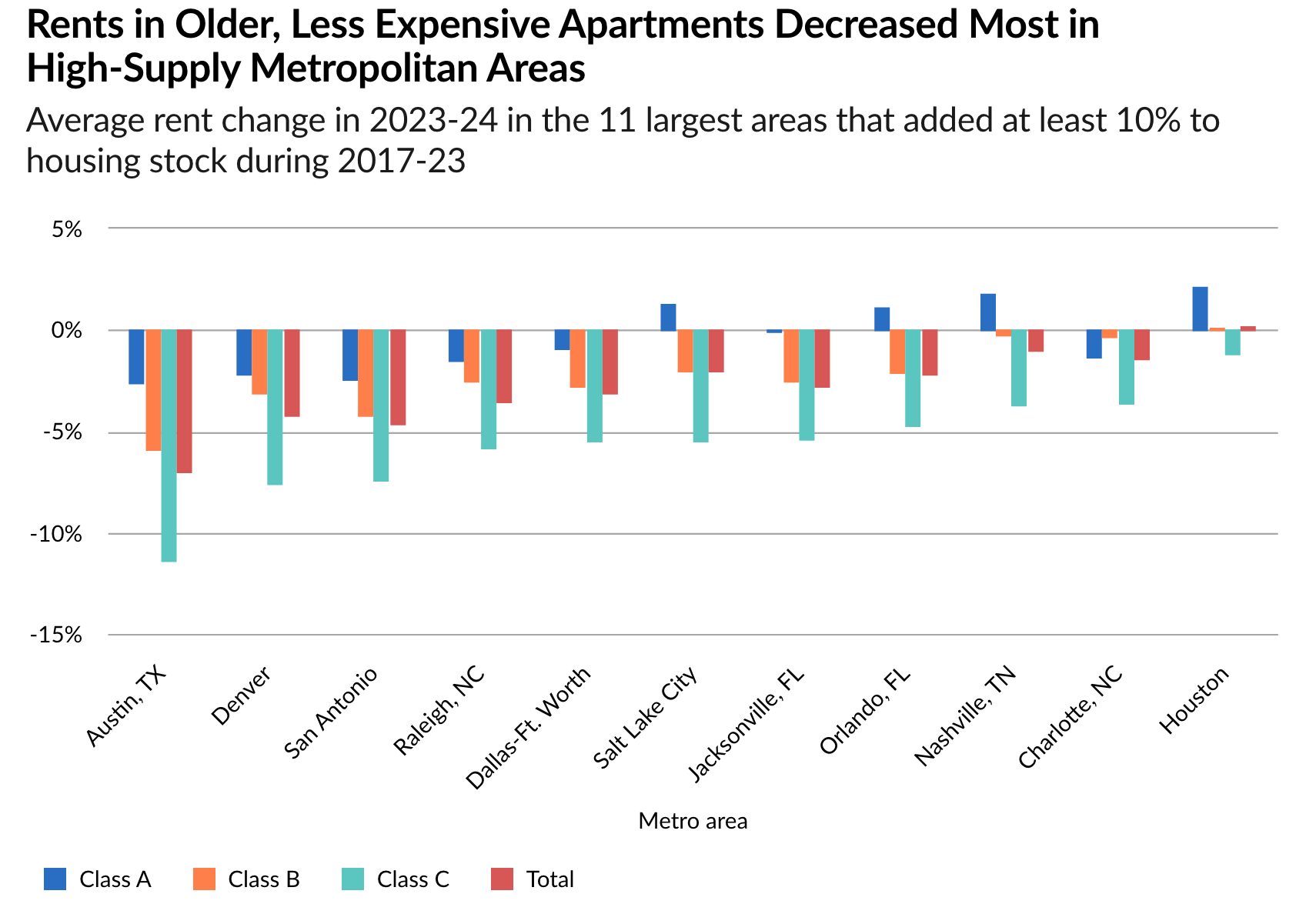
Where is Los Angeles in this chart? We didn’t make the cut - we’re not a “High-Supply Metropolitan Area.” LA hasn’t been building nearly enough homes to lower the rent for any kind of apartment. In the same decade that the number of homes in Austin increased by 30%, the number of homes in Los Angeles went up by only 10%. And that was a good decade for LA. We’ve been underbuilding since the 1980’s. Check out how little housing has been built here in the last 35 years compared to the other cities in the chart:
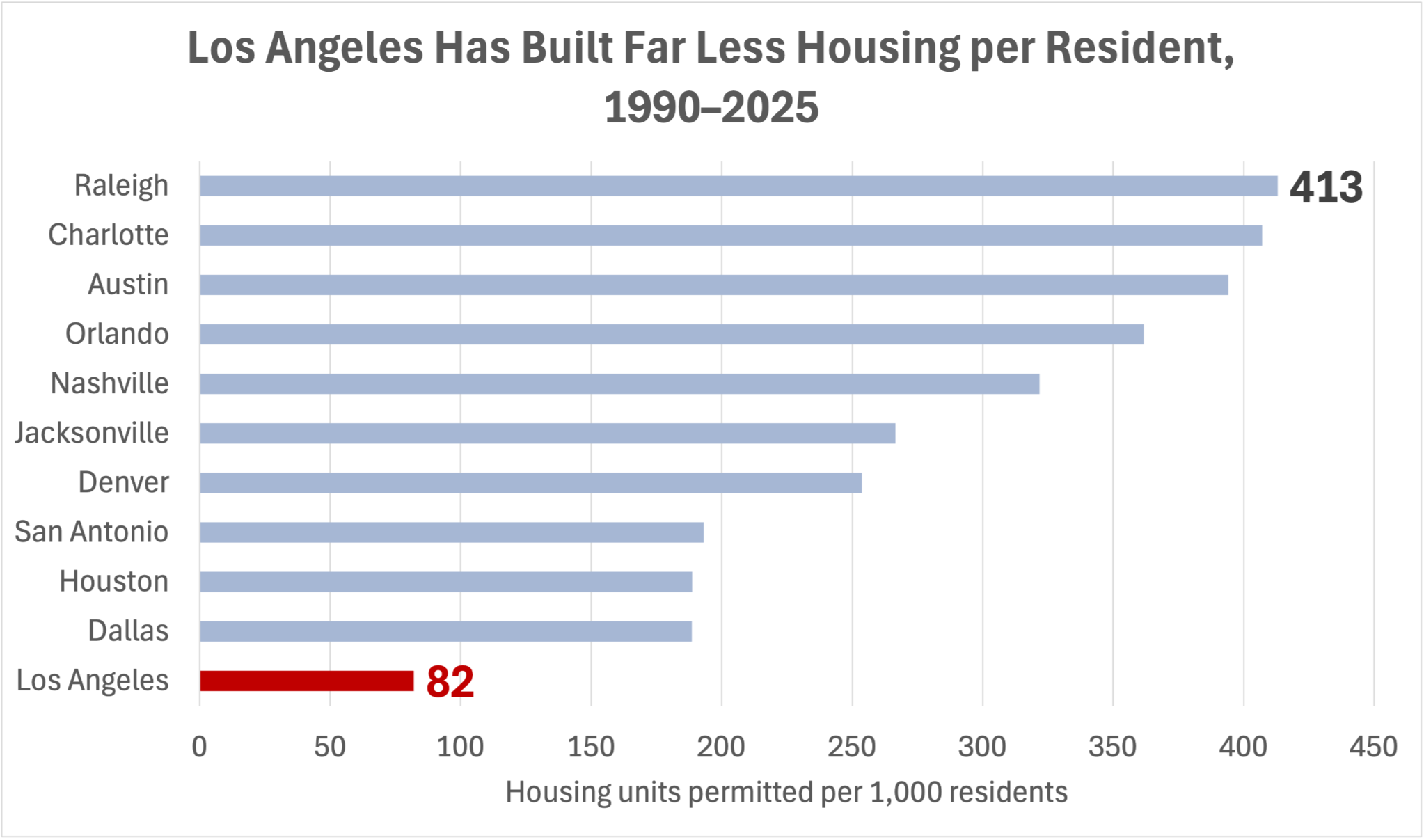
Three things make it harder to build more apartments in LA. First, apartments are illegal in most of the city. We need to modernize our zoning. Second, buildings take years to get approved. We need to cut red tape. Third, the city slaps high fees and taxes on new construction. We need to make it cheaper to build.
It’s going to take decades to reverse the damage wrought by decades of underbuilding, and we may not have decades to fix Hollywood. But we can start. Every little bit that rent falls gives another renter a little more slack - another month to wait tables while going on more auditions, another internship at a design studio to try.
Creativity drives LA. The city is home to the largest number of creative people ever gathered in one place in human history, with the possible exception of Mumbai. Those creatives have fostered a unique culture here. LA evokes a spirit of reinvention, a looseness of structure, and a live-and-let-live ethos that gives people moral slack - the opportunity to try new ideas without being judged or pigeonholed. When I first moved here, I marveled at how often I went out to a show and ended up in a 2 a.m. jam session at a stranger’s house across town.
Imagine all of that gone. Imagine LA without the hundreds of thousands of people that make it magical. We could end up like Detroit, where the companies are still headquartered there but the work is largely done elsewhere.
Jon Hamm was a broke waiter for a decade before getting cast in Providence. Kristen Wiig worked at Anthropologie and took classes at Groundlings for five years before getting the call from SNL. George Clooney worked odd jobs for 12 years before ER. The next big star is getting off the Greyhound from Phoenix today, but if we don’t give her enough slack, she’ll be back on the bus home before ever getting a fighting chance.
About $1345 in today’s dollars.